
“Do what you love and you’ll never work a day in your life.”
It sounds poetic. But it’s terrible advice.
When you build a business, only about 30% of your time is spent on the part you truly love and are passionate about.
The rest is everything else: managing people, balancing numbers, marketing, and fixing customer issues.
What keeps you going is not passion.
It is evidence that your business is working.
Customers are paying and loving what you offer. They’re finding real value in engaging with you.
Passion helps, but it is not the foundation.
Passion is not a compass. It is an amplifier. It makes you louder in the direction you are already moving, whether that direction leads to success or collapse.

The Starbucks Lesson
Howard Schultz was passionate about coffee.
On a trip to Milan, he walked into a café and felt something spark inside him.
People weren’t rushing off with paper cups. They were staying. Talking. Reading. Connecting. Coffee was more like a ritual than a transaction.
He came back to America with a vision: coffee could be more than caffeine.
It could be a third place. Not home. Not work. But the other place where life happens. Where people gather, share ideas, and feel like they belong.
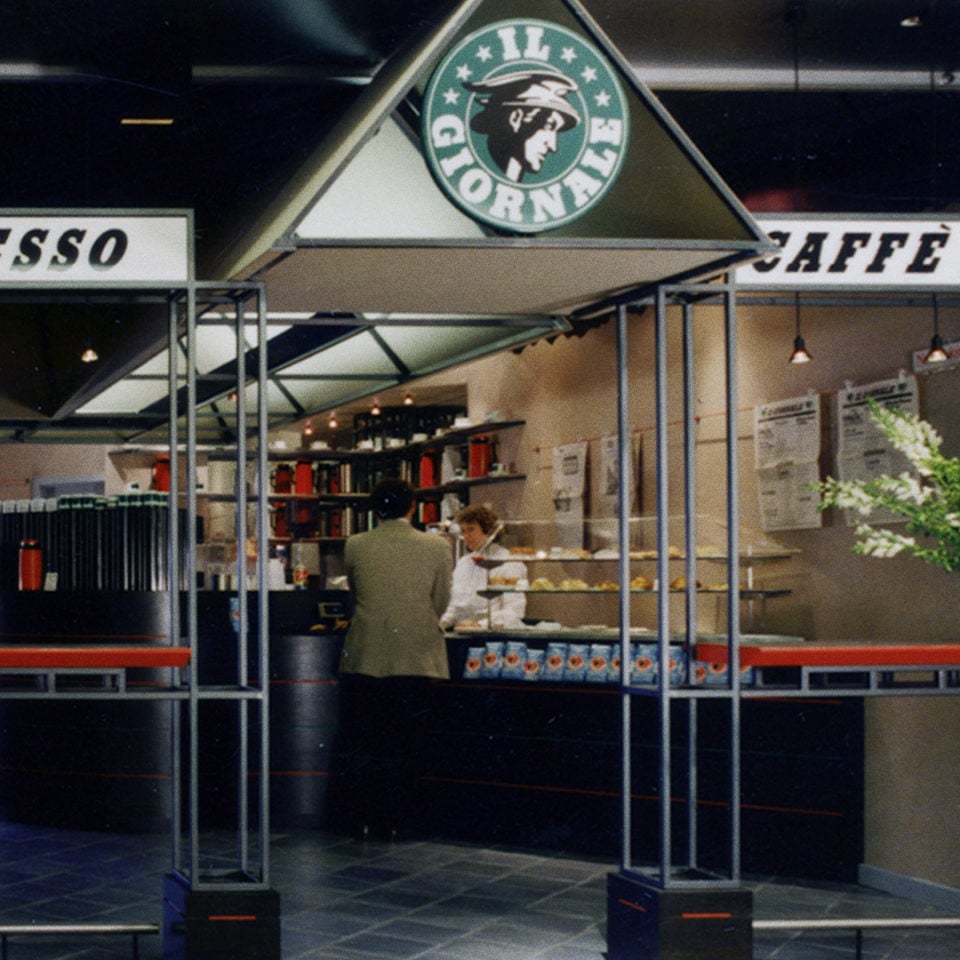
So he opened Il Giornale or The Newspaper. He imagined people sitting with newspapers and books, just like in Milan. It was his first attempt to bring that vision to life.
At the time, Schultz was still a marketing director. He didn’t have a blueprint for building an empire.
What he had was passion and the willingness to speak his vision out loud to anyone who would listen.
Right around the corner was a small chain called Starbucks. Six stores. Owned by Jerry Baldwin, who was more focused on building his other brand: Peet’s Coffee and Tea.
Schultz saw the opportunity.
Baldwin gave him the chance to raise $3.8 million from investors and take Starbucks into his own hands.
This is where passion met skill.
Schultz was gifted at marketing. He was well-connected, and knew how to tell a story that made people lean in.
He combined that with the third-place vision and built something the world had never seen before.
That is how Starbucks became more than a coffee shop. It became culture.

The lesson: Having a passion is not enough. Ideas alone do not build $100 billion companies.
Schultz could have rested on the excitement of the moment, the romance of espresso, the thrill of inspiration. But he did not.
He built systems.
He figured out how to train baristas consistently, how to design stores for experience, and how to scale without losing the magic he had seen in Italy.
Every detail, from sourcing beans to designing the customer journey, was intentional, measured, and repeatable.
He executed relentlessly, turning an idea into a living, breathing system that could grow and thrive.
Passion fueled him, yes, but it was the systems, the processes, the disciplined execution that made Starbucks what it is today.
The coffee was never the product. The system was.
If you want to build a business around what you love, passion alone will not get you there. You need to build systems to turn it into something real, repeatable, and scalable.

Why Passion Betrays Founders
Passion often blinds founders more than it guides them.
- Optimism bias: 42 percent of startups fail because there is no market need. Passion convinces you everyone will want what you are building.
- Sunk cost fallacy: Once you pour your heart in, it is hard to stop. Yet companies that pivot early are three times more likely to survive.
- Identity lock-in: You equate the business with who you are and refuse to shift, even when the market screams otherwise.
- Operational contempt: You love the craft but hate the daily grind. Founders who cannot stand the operational side are three times more likely to quit within three years.
I’ve seen so many talented people burn out in restaurants, gyms, coaching, and creative industries. They were not weak. Passion made them intolerant of the work that actually drives growth.
Four ways in which passion plays out in business
Not all passion is created equal in business. Sometimes it leads to massive success, and other times it fizzles out despite your best efforts. The difference usually comes down to how you combine passion with skill, discipline, and a realistic view of the market.
These four examples show what works, what doesn’t, and the lessons you can apply to your own journey.
Models that work
- Passion + Skill = Magnetic Execution
When you love what you do and are really good at it, people notice and your work spreads.
Example: The founders loved design and travel, but Airbnb didn’t start as a billion-dollar idea.
They struggled to get anyone to sign up for their platform.
They experimented with photos, listings, and hosting experiences, refining every detail.
Their passion for design and travel kept them motivated, but it was their skill in understanding people, building systems, and iterating that turned a quirky idea into a $100 billion brand.
Every small improvement made the platform more irresistible, and eventually, the market noticed.
- Passion + Discipline = Sustainable Growth
Passion gives energy, but discipline makes it last. Systems and structure turn excitement into a business that can grow for years.
Example: My friend and co-founder of Mindvalley Coach, Vishen, started his journey by selling meditation CDs online at a time when almost no one knew much about meditation.
He was passionate, but he also recognized a real need in the market. That combination of love and opportunity is what eventually turned Mindvalley into the global giant it is today.

Models to avoid
3: Passion + Delusion = Spectacular Failure
Love alone is not enough. If your idea doesn’t solve a real problem, passion can’t save it.
Example: Juicero sold a costly Wi-Fi juicer. But the juice itself came in pre-packaged pouches.
Basically, bags of chopped fruits and veggies. The machine’s only job was to press those bags and squeeze juice into your glass.
Then Bloomberg ran a video showing that you could just use your hands to squeeze the pouch and get the same result. No $400 machine needed.
That revelation destroyed the company’s credibility overnight. It proved the product wasn’t solving a real problem.
4: Passion + Boredom = Silent Killer
The unsexy work never goes away. Editing, shipping, and customer support all matter. If you ignore them, passion fades and businesses die.
Example: Thousands of YouTube creators and Etsy sellers start with excitement for their craft, but quit when they discover most of the job is editing, shipping, and customer support. Passion does not erase the unsexy work, and ignoring it ends careers.

If You Don’t Have Passion Yet…
You are not doomed.
Build a mission worth testing.
Start with your values.
I built Mindvalley Coach on my values of love, service, and freedom. Those values shape everything I create, regardless of the business model.
From there, think of it as Ikigai+. The classic Japanese concept of Ikigai is about finding your reason for being at the intersection of four principles:
- What you love doing in your free time: This isn’t about a burning passion. It’s simply your hobbies, interests, and the little things that bring you joy.
- What you are good at: Your talents, skills, and natural strengths.
- What the world needs: The problems you can help solve or contribute to.
- What you can be paid for: The services or value people are willing to invest in.
To make this practical for building a business, we add two more filters:
- Learning appetite: Can you remain curious and continue to grow over the next 6 to 12 months?
- Time: Do you realistically have hours to commit to testing and building this?
Use this model as a filter.
Score each category from 0 to 10. If your total score is under 20, it’s probably not worth a sprint right now.

Your 90-Day Profit Plan
Building a business doesn’t have to be complicated.
The fastest way to know if your idea works is to test it with real paying customers, learn from what actually happens, and improve step by step.
This plan helps you do exactly that in 90 days. You’ll start small, deliver manually, measure results, and then decide whether to scale or stop.
Every step is about minimizing risk, learning quickly, and making sure your time and energy go into something that truly works.
STEP 1: Test the Idea (Weeks 1 to 2)
- Talk to 30 potential customers.
- Offer a small, paid version of your product or service. For example, a coach selling a workshop for $99, before launching a higher-ticket course.
- If nobody pays, stop. Studies show that no early buyers predict failure 80 percent of the time.
STEP 2: Deliver Manually (Weeks 3 to 6)
- Provide the product or service by hand. No software or automation.
- Track your profit per sale, time spent, and repeat buyers. For example, attendees signing up for the full course after the workshop. Retaining 20 percent more customers can increase profits by 25 to 95 percent.
- If profit margins are below 40 percent or nobody comes back, stop.
STEP 3: Improve One Process (Weeks 7 to 10)
- Automate or delegate the most time-consuming part of your work. Businesses that streamline operations scale two to three times faster.
- Test raising prices by 20 percent. Research shows most markets can absorb a 10 to 30 percent increase without losing customers.
STEP 4: Decide to Kill or Scale (Weeks 11 to 12)
- Did at least five customers pay real money?
- Did at least 30 percent return for more?
- Do you feel willing to handle most of the ongoing work? Businesses where founders enjoy daily operations are three times more likely to survive past year three.
If yes, scale it. If not, stop or pivot. Do not drag it out.
Use Passion as a Tool, Not a Compass
Passion is fire. Fire builds civilizations. Fire also burns them down. Treat it like a tool.
- Run short, ruthless 90-day missions.
- Measure success with customers, not feelings.
- Stop asking “What am I passionate about?”
- Start asking “what problem am I willing to test for 90 days, even if it feels boring?”
You Got This
If you’re reading this, it means there’s something inside you that wants to be built.
My invitation to you is simple: don’t wait for the perfect idea, the perfect timing, or the perfect wave of passion to arrive.
Start with what you have.
Run the 90-day sprint.
Test it. Learn. Iterate.
The path gets clearer as you move. Momentum, not perfection, is what brings ideas to life.
How Did We Do?
If this gave you a perspective you haven’t heard before, share your thoughts in the comments below. I read every comment — your feedback helps me create content that truly moves you forward.
Love. Ajit