
Everyone thinks success comes from making the right decision. From choosing perfectly, timing it exactly, and getting it right on the first try.
In reality, success comes from making enough decisions.
From showing up again and again, even when you are unsure, even when the outcome is unclear.
We tend to obsess over quality. We want our work to be polished, strategic, and well thought out before we begin.
What we often forget is volume.
Volume is what creates learning. Volume is what builds confidence. Volume is what eventually reveals what actually works.
Without enough attempts, even good decisions do not have a chance to compound.
Warren Buffet’s 4% That Built Everything
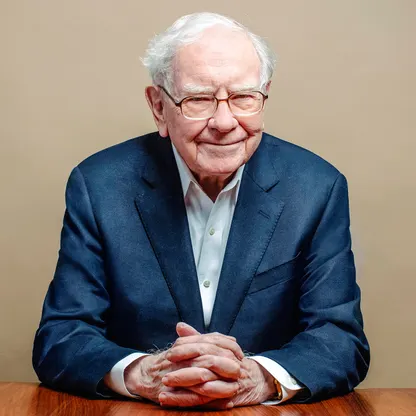
When people look at Warren Buffett, it is easy to assume he must be right most of the time.
Like every decision he made turned into success.
But that is not how it actually worked.
Over more than 50 years, Buffett made thousands of investment decisions. Some worked. Many did not. Most were simply part of the process.
People who have studied his career often point out that only about 4% of those decisions created the majority of Berkshire Hathaway’s value.
That means the remaining 96% were not magical. They were ordinary. Some were wrong. Some did nothing.
And yet, that was enough.
Because Buffett never needed all his decisions to work. He only needed a few to work really well.
Now here is the part that matters for the rest of us.
If we already consider Warren Buffett exceptional, disciplined, and deeply experienced, then it is only fair to assume that our own success rate might be lower. Maybe 1% or 2% of our decisions truly move the needle.
That is not a failure.
That is being human.
It simply means this.
You are not meant to get it right quickly. You are meant to keep trying gently, consistently, and long enough for the one decision that works to reveal itself.
Most people stop before that moment arrives.
Not because they are incapable, but because they expect results too early.
Buffett stayed. He kept deciding. He trusted that probability would eventually meet patience.
And that is something all of us can practice.
Warren Buffett didn’t win because every decision was brilliant.
He won because he stayed in the game long enough for the few great decisions to compound.
The lesson:
You do not need to be right often.
You only need to stay in the game long enough for the right decision to appear.
Why Early Effort Always Feels Awkward
When you do something new, your body does not know yet if it is safe.
Your brain’s first job is not confidence or creativity. It is protection.
So when you try something unfamiliar, like recording a video or speaking live, your system goes into alert mode.
That is why your voice may shake.
That is why your mind goes blank.
That is why you suddenly feel very aware of yourself.

Nothing is wrong. This is your nervous system learning.
In the beginning, your mind understands what you want to do, but your body has not caught up yet.
Confidence does not appear first. Confidence comes after repetition.
So in your first few attempts, you may fumble. You may forget what you planned to say. You may feel stiff or unnatural. That does not mean you are bad at this. It means your system is still getting used to it.
Each time you show up, something important happens quietly.
Your body learns, “I did this and I was okay.”
Your nervous system relaxes a little more. Your thoughts slow down. Your energy settles.
After enough repetition, you stop trying to control everything. You stop performing. You start speaking naturally.
Most people quit before this moment, not because they cannot do it, but because they expect comfort too soon.
Awkwardness is not failure.
It is the learning phase.
And the learning phase always comes before ease.
How I Learned to Go LIVE 🔴 Without Fear
There was a time when my marketing team kept telling me that live webinars were the fastest way to bring people into our ecosystem.
I knew they were right, but I had a block. The idea of going live made my chest tighten and my mind spin. I wasn’t ready. Or at least, that’s what I told myself.
One day, I decided to stop overthinking. I just went live.
I showed up shaky. My energy felt uncertain. When it came time to pitch my product, I rushed through it, trying to finish quickly. I stumbled. I apologized mid-sentence. It was far from polished.
But I didn’t quit.
I took feedback. I adjusted. I showed up again. And again. Each time, a little smoother. A little more natural.
Over time, something shifted. My confidence began to catch up with my intention.
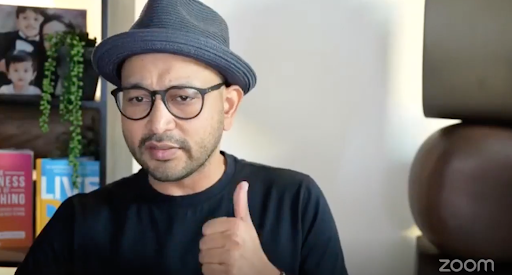
Now, I can go live if someone wakes me at 3 a.m., and deliver a presentation that feels effortless.
Not because I am special.
Not because I suddenly became perfect.
Because I stayed long enough for version one to become version ten.
Lesson:
Don’t wait to feel confident. Confidence comes from showing up repeatedly. Repetition turns fear into ease, and awkwardness into mastery.
Volume Creates Clarity and Confidence
When you try something new, it is impossible to see the full picture from just a few attempts.
Your understanding, intuition, and confidence are all built through repeated practice, not through thinking harder or analyzing more.
Russell Brunson (the webinar genius) ran around 70 webinars on the same topic before he truly understood what worked.
Each session gave him feedback, experience, and data. Over time, he could see patterns and recognize what resonated with his audience.

The lesson is simple: clarity comes from repetition. The more you do something, the more your mind, body, and nervous system learn how to handle it. Confidence follows naturally.
This is why the practical rule works for any effort:
- Post at least 100 times before judging social media.
- Run at least 50 webinars before deciding webinars don’t work.
- Do multiple launches before concluding your offer has failed.
Anything less is not enough to learn or draw meaningful conclusions. Early results are incomplete and can mislead you if you stop too soon.
Volume gives you the data, the experience, and the confidence you need to improve.
There’s a quote I really love by Bruce Lee:
“I fear not the man who has practiced 10,000 kicks once, but I fear the man who has practiced one kick 10,000 times.”
The Growth Through Repetition Framework
Step 1: Begin Before You’re Ready
- Purpose: Break through fear and start building momentum
- Core idea: Action creates confidence, not preparation
- Example: Posting your first social media video, going live for the first time, or launching your first offer
- Reflection: What’s one small step I can take today, even if I don’t feel ready?
Step 2: Repeat With Focus
- Purpose: Learn what works and refine your approach
Core idea: Repetition produces insight, patterns, and improvement
Example: Doing 50 webinars on the same topic or posting 100 times to see what resonates
Reflection: Am I noticing what works and adjusting each time?
Step 3: Identify Your High-Impact Actions
Purpose: Multiply results by focusing on what actually moves the needle
Core idea: A small percentage of actions deliver the majority of results
Example: The 4% of decisions that create most of Berkshire Hathaway’s value, or the one post or webinar format that consistently gets traction
Reflection: Which efforts consistently produce results, and how can I focus on them more?
Step 4: Build Confidence Through Experience
Purpose: Turn awkwardness into ease and mastery
Core idea: Comfort and skill come from repeated exposure
Example: Running live sessions confidently after multiple attempts, or consistently creating content without second-guessing
Reflection: Where have I already proven I can handle discomfort, and how can I trust persistence will lead to mastery?

Reflection Prompts
Am I quitting before my energy has a chance to settle?
Have I mistaken early awkwardness for failure?
Where am I expecting mastery without reps?
If I committed to volume, what would change?
Your Action Steps
- Start Now, Even If It Is Messy
- Pick one small action today, your first post, live, or launch. Do not wait to feel ready.
- Show Up Regularly
- Commit to consistent effort. Schedule your posts, webinars, or practice sessions and stick to them.
- Track, Learn, Adjust
- After each attempt, note what worked, what felt awkward, and what you can improve next time.
- Focus on Repetition, Not Perfection
- Give yourself enough repetitions to let confidence and clarity emerge naturally.
- Double Down on What Works
- When you find an approach that resonates or performs well, prioritize it and refine it further.
Let’s Design Your 2026 Together
I created a custom GPT to make your 2026 planning process easier and more effective.
Instead of guessing what to focus on or overthinking your goals, this tool guides you step by step, helping you clarify your intention, define meaningful goals, design supportive systems, and stay aligned all year.
Get the custom 2026 GPT planner here
How to use it:
Simply enter a short message (for example, “Hi”) to get started.
You’ll be guided through 8 questions. Answer each one with as much detail as you can.
Based on your answers, the GPT will create a clear 12-month plan, a 90-day focus, and a 6-week sprint you can follow step by step.
How Did We Do?
If this gave you a perspective you haven’t heard before, share your thoughts in the comments below. I read every comment — your feedback helps me create content that truly moves you forward.
Love. Ajit