

One of the biggest challenges multipassionate founders face is deciding which passion to pursue first.
When everything feels important, nothing moves forward.
Some abandon businesses halfway to chase the next idea.
Others stay stuck, overthinking, waiting for clarity that never arrives.
Silicon Valley billionaire Naval Ravikant wasn’t always a philosopher

He began as someone trying to survive the startup world.
In the late 1990s and early 2000s, Naval was doing what many ambitious people do early in their careers.
He was working long hours.
Building startups.
Learning by failing.
He co-founded companies like Epinions, which eventually sold, but not in a way that made him free.
He tried again with Vast.com.
Some things worked. Many didn’t.
Naval has said this period was stressful and uncertain.
There was no clear identity.
No grand philosophy.
Just repetition.
Build. Learn. Try again.
During this time, Naval had many interests.
Technology. Markets. Human behavior. Philosophy.
But none of those paid him reliably.
So he didn’t organize his life around them.
Instead, he focused on one thing:
putting himself in positions where leverage could emerge.
That decision led to AngelList.
AngelList didn’t start as a media platform or a personal brand. It started as a practical solution to a real problem:
- Founders needed capital.
- Investors needed access.
- The system was inefficient.
Naval built infrastructure.
And this time, it worked.
AngelList created three things Naval had never fully had before:
- Financial independence
- Network leverage
- Time without urgency
That changed how he used his attention.
Only after AngelList was working did Naval begin writing publicly.
Only then did he speak openly about happiness, wealth, and freedom.
Only then did philosophy move from a private interest to a public contribution.
Not because he finally “found his passion.”
But because the pressure was gone.
Here’s the lesson Naval’s own story teaches:
He didn’t suppress his interests.
He delayed expressing them until they didn’t have to carry his survival.
Multipassionates Don’t Need Focus. They Need Order
The challenge is not having many passions. The challenge is thinking they all need your attention right now.

When everything feels urgent and important, it is easy to freeze or jump too fast.
That is why so many multipassionate founders either burn out or stall completely.
The truth is, not all passions are equal at any given moment.
Usually, only two or three truly excite you.
That does not mean the others are gone forever. It means you need a sequence.
Start with the passion where you have leverage, the one you can act on now because of your skills, experience, or proof it can succeed.
Go deep on that for long enough to build momentum. Use tools, AI, or temporary shortcuts if needed.
Once the first passion is running, add support, then move to the next. The third follows.
Some interests fade. Some stick for life. You do not need to know which now.
The key is order, not focus.
A structured sequence lets you fund, grow, and preserve all your passions. Money becomes fuel, not a cage. Progress becomes a ladder, not a trap.
Start With the Passion That Can Pay Your Bills
Here’s what most people don’t talk about:
Not every passion can support you at first.
If you try to force it to, it will bend.
It won’t feel the same as when it was just yours.
You’ll start asking, Will this make money? Instead of Does this feel right?
You’ll rush decisions and take on work that drains you.
Slowly, the thing you loved becomes heavy.

The smart way to start a business is this: find the passion that can pay your bills first.
How do you find it? Look at your past.
Where has your passion already made money before?
Where have you had success or proof that people will pay for it?
That’s where you start.
Not with the newest idea. Not with what feels the most exciting. Start with what already works.
Once you have this first passion generating income:
- It gives you stability.
- It gives you confidence.
- It gives you freedom to explore your other passions without pressure.
Work in phases.
The first 6–12 months may be messy. You may do most things yourself. You may lean on tools or AI. That’s fine.
Once the business grows, you can hire support and layer in your other passions.
Most people fail not because they lack passion, but because they try to start everything at once.
Start with proof. Start with what already works.
Most people fail not because they lack passion, but because they try to start everything at once.
Start with proof. Start with what already works.
The Passion-Priority Framework
Step 1: Score Your Passions
Purpose: Identify what truly excites you.
How: Make a list of all your passions. Rate each one from 1 to 10 based on how much energy, excitement, and fulfillment it gives you.
Reflection: Which passions make your heart race? Which ones feel flat?
Step 2: Identify the Real 10s
Purpose: Focus on what matters most first.
How: Notice the top few passions. Usually only two or three will be a true 10.
Action: Keep all passions in your vision. Do not abandon or deny the others. They are part of your bigger picture, just not your starting point.
Step 3: Ask the Leverage Question
Purpose: Choose the passion that can support your business and life right now.
How: For each 10, ask:
- Which one can I act on today and get results?
- Which aligns with skills, experience, or proof that it can succeed?
Action: Pick the one with the most leverage. This is your starting point. You don’t need to commit forever, just long enough to gain momentum.
Step 4: Go Deep
Purpose: Build traction and proof.
How: Work intensely on your chosen passion for 6–12 months.
- Do the work yourself if necessary.
- Use AI, tools, or temporary shortcuts to speed execution.
Reflection: Focus on momentum, not perfection. Complexity can come later.
Step 5: Layer in Support and Next Passions
Purpose: Scale and expand without losing energy or creativity.
How:
- As income grows, hire help to free yourself from execution.
- Once stable, move to the second passion. Repeat for the third.
Reflection: Some passions may fade. Some may last a lifetime. Order matters more than speed. Money becomes fuel, not a cage.
Reflection prompts
- Which passion already has proof that it can succeed and support you right now?
- Where could focusing on leverage first give you freedom to grow the rest?
- Are you chasing excitement, or are you building momentum that will last?
- How would your approach change if money was a tool to expand your passions, not the measure of them?
- Which passion, if you went deep on it for the next 6–12 months, could set up the rest to thrive?
Your Action Steps
I’m hosting a free live webinar on The 3 Shifts That Will Help You Build Your First $250K Business, designed to help you turn your top passion into a business that actually works.
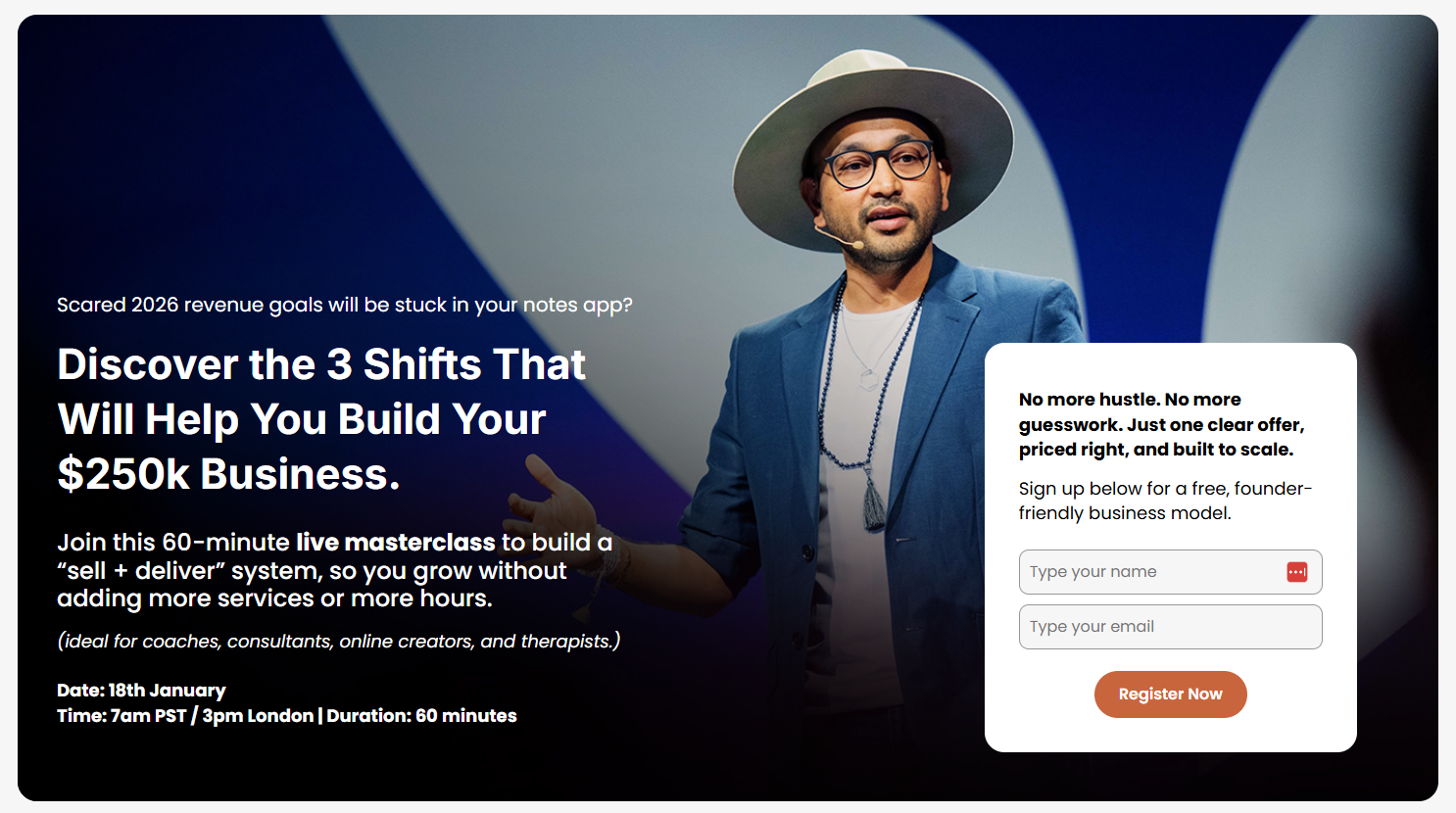
In this session, I’ll show you how to pick the right passion to start with, build leverage from your past experience, layer in your other passions without burning out, and use money as fuel to grow all your ideas instead of pressure.
If you’re ready to finally get clarity on which passion to focus on and start building a business that supports your full vision, you can register using the link below.
How did we do?
If this gave you a perspective you haven’t heard before, share your thoughts in the comments below. I read every comment — your feedback helps me create content that truly moves you forward.
Love. Ajit