How many products have you bought hoping they’d change your life, only to forget about them a week later?
And then there are those few you can’t live without.
They don’t just work, they get you.
They make you feel seen, inspired, even a little more you.
So what makes something so magnetic that people don’t just use it, they obsess over it?

The story of Rihanna’s Fenty Beauty
When Rihanna started Fenty Beauty in 2017, many people didn’t take it seriously.
They thought, “Another celebrity makeup brand. This one won’t last.”
And honestly, that was a fair guess.
The beauty world was already full, and it mostly served only a few kinds of people.
Most brands focused on one kind of beauty and ignored everyone else.
So how did Fenty Beauty not only succeed but change everything?
They solved a problem no one else was solving.
For years, makeup came in very few shades.
If your skin was darker, you couldn’t find one that matched you.
Rihanna noticed this and decided to do something about it.
When Fenty launched, it came out with 40 foundation shades right away.
Each shade made people believe:
You exist. You matter. You belong.
And for the first time, millions of people finally felt seen.
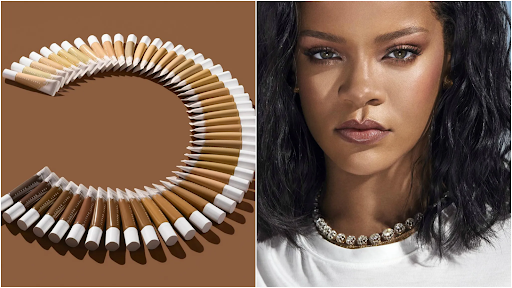
Here’s where it gets interesting. Fans didn’t just buy makeup. They joined a movement.
#FentyFace went viral.
Women and men all over the world shared selfies, swatches, and stories about finally finding a match. For the first time, an entire segment of consumers felt recognized by the beauty industry.
Rihanna was not just selling makeup. She invited people into a community where representation was the foundation.
Their success lasted beyond just the day of launch. Rihanna’s team built ongoing engagement:
- Limited releases that created excitement
- Celebrity collaborations that felt aspirational yet attainable
- Tutorials, swatches, and social media content that educated and inspired experimentation
Every touchpoint was designed to bring people back. Every interaction reinforced the sense that Fenty wasn’t just a brand. They were a part of your story.

Fenty made beauty fun. Playful. Experimental.
- Users could track their own evolution by trying new shades, following tutorials, and sharing results online.
Every swatch, swipe, or selfie was a little victory, a little marker of growth, a little boost of confidence.
Products that let you see progress are sticky. They’re addictive. They make people feel invested in themselves and in the brand.
Here’s the final piece: Price
Fenty didn’t feel out of reach. It wasn’t bargain-bin. It wasn’t unattainable.
It was just right. Mid-range luxury. High-quality. Overdelivering on every front.
People felt like they were investing in a feeling, a solution, a little slice of empowerment. It was beyond just buying a product.
The Deeper Lesson Behind It All
We live in an era of choice overload.
App stores have over 5 million apps, yet most are abandoned within days.
Cosmetic shelves overflow, yet people only buy a handful of products repeatedly.
Even products designed to simplify life often end up becoming more clutter.
And it’s not just a consumer problem.
Founders face it too.
You can build something brilliant, but if it doesn’t connect deeply, it dies quietly.
The challenge isn’t building more products. It’s building products that matter, products that embed themselves into human behavior and culture.
The Anatomy of a Great Product
Great products aren’t built on features, trends, or marketing gimmicks.
They’re built on psychology. On human behavior. On the invisible threads that tie desire, belonging, and meaning together.
When you look closely at any product that changes culture, you’ll find five core elements running through it like DNA.
These five aren’t just design choices; they’re psychological levers that shape how people think, feel, and act.
They are:
- A predictable system solving a clear problem
- A built-in community
- Engagement loops
- Progress tracking
- Unbeatable perceived value
Nail these five, and people don’t just buy your product. They live it.
Element 1: Predictable System Solving a Clear Problem
Humans crave certainty in chaos. When a product gives them predictability, it gives them peace.
A predictable system does three things:
- Clarifies the problem. People know exactly what’s being solved.
- Shows a step-by-step path to resolution. It feels like someone’s holding their hand through the fog.
- Builds instant trust. Predictability creates safety, and safety drives loyalty.
Think about it. The reason you open your favorite app daily isn’t randomness, it’s rhythm. It’s the subconscious comfort of knowing what comes next.
Confusion is the death of adoption. The second someone feels lost, they leave.
Actionable tip: Ask yourself, if someone picked up your product blind, could they understand what it does and how it helps within three minutes?
Element 2: Community
Humans are wired for connection. It’s not enough for a product to work, people want to feel seen inside it.
The secret behind truly sticky products is social belonging. When people see others using it, celebrating it, and building identity around it, they want in.
Fenty Beauty nailed this. They went beyond just makeup. They made it about representation.
People weren’t buying foundation, they were buying the feeling of being included in a movement.
When your users find themselves reflected in your product, they don’t just buy it. They defend it.
Actionable tip: Build ways for users to interact, share wins, and celebrate each other. Community is the emotional glue that makes your product unforgettable.
Element 3: Engagement Loops
Engagement here is about emotion, not time. You don’t want people to just stare at your product or app. You want them to feel something positive when they use it.
The idea of habit architecture is this. The best products create small, repeatable experiences that make users feel rewarded. For example:
- A notification reminds you of something useful or fun.
- A progress bar shows you how far you’ve come.
- A streak celebrates consecutive days of using the product.
- A new update gives you something fresh to explore.
Each of these is a tiny “win” that makes you feel satisfied or accomplished. When these wins happen often, your brain starts associating the product with positive feelings like happiness, progress, or confidence.
The goal is not tricking people or keeping them busy. It is creating momentum. People start coming back because it feels good, not because they have to.
In short: great engagement is about designing your product so that users get small rewards that make them want to return, naturally forming a habit.
Actionable tip: Identify the moments in your user journey that create emotional reward. Then amplify them.
Element 4: Progress Tracking
Nothing motivates like visible growth.
When users can see their progress, they start believing in themselves through your product.
This is why feedback loops are so powerful. They transform abstract effort into tangible achievement.
When Fenty customers share their before-and-after looks or watch their makeup skills evolve, they experience more than the product. They witness their own transformation and growth.
Gamification, dashboards, streaks, progress bars, these are more than UX tools. They’re mirrors reflecting back a user’s competence.
Actionable tip: Don’t just promise transformation. Show it. Create visible milestones that remind your users how far they’ve come.
Element 5: Unbeatable Price and Value Perception
Pricing is more than just numbers. People feel emotions when they see a price.
If something costs too much, they feel left out or think they cannot afford it.
If something costs too little, they might think it is cheap or low quality. It lacks aspirational value.
The best price makes people feel like the product is just right for them. They feel they are getting something valuable without paying too much.
Fenty found this balance. Their makeup felt high quality and luxurious, but the price was still reasonable.
People felt excited to buy it and proud to use it.
When the value feels bigger than the price, people don’t just buy. They want it and trust it.
Actionable Tip: Make sure every price feels like a smart choice, not a gamble. People should feel “I got so much for what I paid.”
People Don’t Buy Products. They Buy Possibility
At the end of the day, people don’t buy what you make.
They buy what it makes possible.
They buy how it makes them feel.
They buy the identity they get to step into every time they use it.
Look at the products you swear by. You’ll notice the same five elements running through all of them.
Reflection Prompts
- Which of the five elements, predictable system, community, engagement loops, progress tracking, or perceived value, matters most to you when you decide to invest in a product?
- How does your favorite product make you feel seen, understood, or part of a community?
- How could you apply these lessons to your own work or ideas to create something people do not just use, but live?
How Did We Do?
What were your biggest takeaways from this? Hit reply and let me know. I read every message, and your feedback helps me create content that truly moves you forward.
Love. Ajit